When leaders talk about branch ROI, the conversation usually starts with numbers. Accounts opened, loans originated, portfolio growth. Those matter, but we don’t think they paint the full picture.
The Element Group understands that long-term ROI comes when design choices and staff behavior reinforce each other from day one. That’s where satisfaction, retention, and loyalty compound financial KPIs.
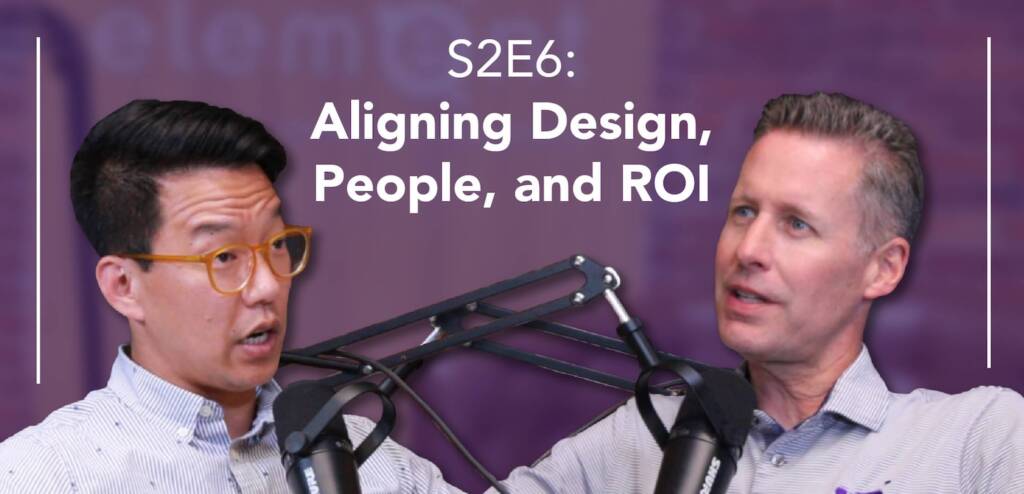
In this episode of the Bits Matter Podcast, host Doug Ridley talks with Marc Healy, our Executive Director of Sales and Business Development. With three decades in retail banking operations and management, Marc explains how early staff engagement, intentional training, and brand-aligned branches enhance both the consumer experience and measurable results.
ROI is bigger than the spreadsheet
Boards and CFOs ask the right questions. What will we do in year one? How many new accounts can we expect? But, when engaging with clients, we go beyond traditional metrics, recognizing that while financial metrics are essential, so are member satisfaction, employee engagement, and brand loyalty. Miss any of these, and the math starts to fall apart.
In the episode, Marc breaks down KPIs into three buckets (examples also included):
1. Financial performance
- Deposit accounts opened
- Loan originations
- Portfolio growth / ROI in year one
2. Customer & member experience
- Member satisfaction
- Retention
- Brand loyalty
3. Employee engagement
- Employee to visitor engagement
- Training effectiveness
Train while you build
Costly training and visitor experience gaps show up when branches wait to engage staff until just before opening. During Element’s design build process, we include managers and frontline teams during the project to share goals, define roles, and connect the space to the behaviors that will lead to success. The faster staff understand the why behind the layout, the faster they execute the experience you designed.
We then build training that shifts conversations from reactive to proactive, so that from day one, employees are seen as trusted advisors and not just tellers.
Make the brand visible and consistent
Consumers will most likely know your brand outside of a branch. Your new branch needs to feel like the same brand. The branch should align aesthetics, signage, and digital content so the physical space delivers the same clarity and promise as your online channels.
Proof in practice
Doug points to client trainings our team has conducted with one of the top ten credit unions in the country, where a branch saw satisfaction rise first, followed by an increase in revenue.
“Yes, satisfaction, retention, engagement are important, but they need to lead to the dollar amount ROI as well. And they’re starting to see that because of that trust, that’s being built,” comments Doug.
Leadership checklist
- Define ROI as financials plus satisfaction, engagement, and loyalty.
- Involve branch managers and frontline teams during design, not after.
- Recruit for consultative behaviors, then train to them.
- Plan campaigns and merchandising alongside space planning.
- Align the physical branch with your digital brand for a true omnichannel feel.
Show notes
Marc’s Presentation: How Design and Brand Aesthetics Impact ROI
Slide 1: Branch Design as a Business Strategy
- Design is more than looks – it’s about purpose and intentionality.
- Layouts that support intuitive navigation, privacy, and comfort enhance the member journey.
- Design can influence behavior: from encouraging digital adoption to promoting deeper conversations.
Slide 2: Branding That Resonates
- A branch should visually and emotionally reflect the brand from signage to finishes to environmental storytelling.
- Consistency across physical and digital channels builds trust and recognition.
- Branding is about creating a sense of place as members should feel like they’ve stepped into a space that reflects their values.
- Members judge your brand within the first 30 seconds of walking in the door – make it count!
Slide 3: Aesthetics That Drive Emotion
- Lighting, materials, color palettes, and acoustics all contribute to how a space feels.
- Aesthetics influence emotional response, welcoming, calming, energizing, and that impacts how long members stay and how they engage.
- Traditional and interactive digital signage adds energy to the branch, reinforces brand messaging, and enhances engagement.
- A well-designed space can differentiate a credit union in a crowded market.
Slide 4: The Role of Staff Training
- Even the best design needs the right people to bring it to life.
- Training ensures staff understand how to use the space, engage with members, and represent the brand.
- When employees feel confident and connected to their environment, performance and morale improve.
- Training is the bridge between design and execution.
Slide 5: ROI Through Experience
- ROI isn’t just financial. It’s measured in member satisfaction, retention, and brand loyalty.
- A well-designed branch can lead to:oIncreased foot traffic
- Higher NPS scores
- More efficient operations
- Greater employee engagement
Slide 6: Case Study – Top 10 Credit Union in the Country
The Challenge
- CU sought to modernize the member experience and create a protomodel branch to guide future development.
- Objectives:
- Align physical space with brand identity
- Improve member engagement
- Streamline operations
- Increase sales
- Enhance community connection
Training Integration
- A tailored training program supported the rollout:
- Hands-on orientation to the new layout
- Session connecting brand identity to service delivery
- Scenario-based training for real-world interactions
- Leadership coaching sessions ensured brand-aligned behaviors were reinforced
- Feedback loop was created to gather staff insights post-launch
Outcomes & Results
- Staff embraced open-concept with increased confidence and brand alignment.
- Members praised the modern, welcoming atmosphere.
- Operational efficiency improved with reduced wait times and streamlined service delivery.
- Location has become the model for both design and staff performance.
Transcript
Doug Ridley: Welcome to the Bits Matter podcast. I’m your host, Doug Ridley, and today we’re wrapping season two, a strategic approach to branch design, with our final episode, Aligning Design, People, and ROI. In this episode, I’m joined by Marc Healy, our Executive Director of Sales and Business Development.
Marc applies his 30 years of experience in retail banking, operations, and management to help our clients deliver the best branch experience. Today, we explore how branch design and early staff engagement go beyond just financial metrics to drive ROI, satisfaction, and lasting loyalty.
Now let’s get started. Marc, thanks for joining me.
Marc Healy: Hey, my pleasure. Thanks for having me.
Doug Ridley: When I’m talking to marketing directors, one of the big things for them is ROI. ROI on marketing campaigns, etc. But when we’re talking about net new branches or big renovations that people are starting to plan for in budget season, I have to think that you are hearing or having similar conversations from the retail side.
Marc Healy: Yeah, that is 100%. And, based upon who you are talking with, like I said, the marketing director, the retail person at the branch, the CFO at a financial institution, they may have a different pace. So yeah, we hear that a lot, so short answer, yes, we hear about it.
And by the reactions that I have, questions a lot of times get asked. Well, what are you going to do in the first year? Like how many new deposit accounts, loan originations, etc., etc.? What is the portfolio doing that will determine overall ROI? And I get that.
However, where I tell our clients is that it is also more than just financial metrics. It is member satisfaction. It is employee and member engagement. It is brand loyalty, etc. So there are a few other things that come into play.
To the point that this topic is so near and dear to my heart that myself and two CEOs of credit unions across the country just presented to a handful of credit unions at a large league event in Orlando back in June of this year, a couple months ago.
And the title of that was How Design and Brand Aesthetics Impact ROI. So we are moving a little bit away from just that financial piece, but to how those elements of the branch absolutely impact positive ROI, and negative if it is not executed in the right way.
Doug Ridley: Yeah, and what we can do is we will add your deck to the show notes as well, so people can take a look at that.
Marc Healy: Great.
Doug Ridley: You mentioned satisfaction, retention, brand loyalty, and I love that last part, the employee and member engagement piece as well. When you are talking to clients and they start planning for this new branch, what are the things that you are getting them to think of much earlier in the process?
You and I have talked about thinking about your first year. You know, right around the grand opening, you are probably too late. We actually start thinking about your first year in the design phase, with merchandising and campaigns you want to run, etc.
Marc Healy: Yeah, you are correct there. For anybody that has managed branches in their current or past lives, we know that retail branches are all about execution. So it starts with the human. There is the human capital component that starts it.
So you are actually talking about the right people, making sure you have the right people who are going to be responsible for running the branch and operating within the branch. You are doing that right at the very beginning. I think that is really important.
Doug Ridley: Especially with some of the training, I think the other thing that we like to do is get people engaged and understanding the goals of that branch early on, from the branch manager and obviously the C suite, etc. Getting everybody involved so they know why we intentionally designed it this way, and where the areas are, not just from a monetary standpoint, but from satisfaction and retention and engagement.
How we want you, as the staff, to engage with people who come into the branch. That is where engagement occurs. That training piece is so critical.
Marc Healy: And the not training and hiring the right type of people, behavioral type assessment studies maybe, as part of the recruitment process. But the training needs to be thought about, because I think what we have found is that, especially since COVID, and I always go back to COVID, because it has been such a transition.
It is a disruptor. It changed financial services. For me, it is a game changer in the training piece. Everybody has been doing stuff the same way. I think most financial institutions are realizing they have to do something a little bit differently and become more consultative in what they are talking about.
Marc Healy: So I think that is why training matters. You are going more proactive in conversations, versus reactive in conversations. How does the branch become an actual ground and a place for an experience.
Doug Ridley: You and Mac Erickson were out in California doing a training at one of our clients where, after six months or so, the client said this specific branch has seen impact. Because we know satisfaction, retention, and engagement are important, and they need to lead to the dollar amount ROI as well. And they are starting to see that because of the trust that is being built.
Marc Healy: Do not wait till the branch is about ready to open to be thinking about training. That is why I think, as you are thinking about the design of what the branch looks like, be thinking about training at the same time.
I always tell our clients that design is strategy. I always say branding builds the identity we are trying to convey in these physical locations.
Because there is such a branding similarity between the website and social media channels. There is a similar look and feel. More times than not, the physical environment does not reflect that consistent omnichannel look and feel and experience that you see in those channels.
All those elements need to work in harmony, in concert with each other. So then training, as we have said in this episode, drives execution. All of that, to go back to ROI, are elements that impact positive ROI.
Doug Ridley: Fantastic. Thank you, Marc.
Marc Healy: Thank you.
Doug Ridley: And that is a wrap on season two of the Bits Matter podcast. A big thank you to William Foley and Marc Healy for joining us and helping prepare for this year’s budget season. This episode was produced by Brian Bald to Desarro, with music by the George Brown Band. Be sure to subscribe and stay tuned for season three, where we will continue to talk all things retail banking. Thanks for listening, and we will see you next time.