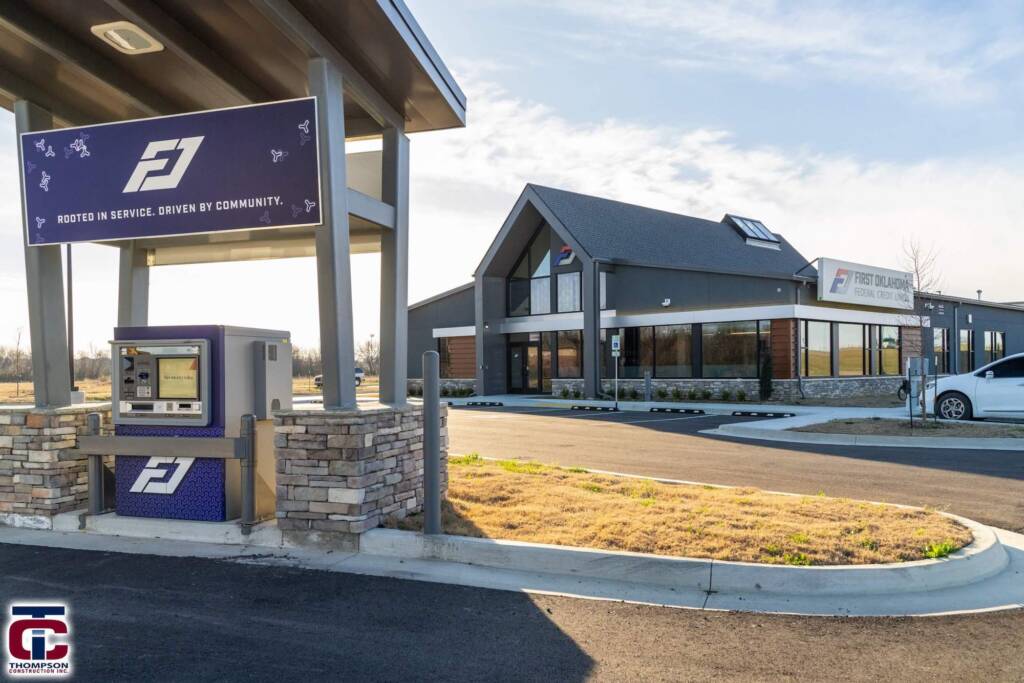
For community banks and credit unions, a headquarters needs to be a place that supports employees, reflects the institution’s mission, and encourage collaboration between teams.
Across recent headquarters projects, several consistent design strategies are emerging. These approaches focus on functionality, employee experience, and long-term adaptability, helping clients compete for talent while staying true to their local roots.
In our experience, we have been seeing these trends improve employee efficiency in today’s work environments.
1. Designing Headquarters Around Culture and Collaboration
Many financial institutions are rethinking headquarters as a place where teams come together to collaborate and reinforce organizational culture.
Instead of isolated departments and private offices, modern headquarters often organize teams in ways that encourage interaction. At Copper State Credit Union’s headquarters in Phoenix, AZ, departments are organized to support collaboration across teams, helping employees connect more easily and work together more effectively.
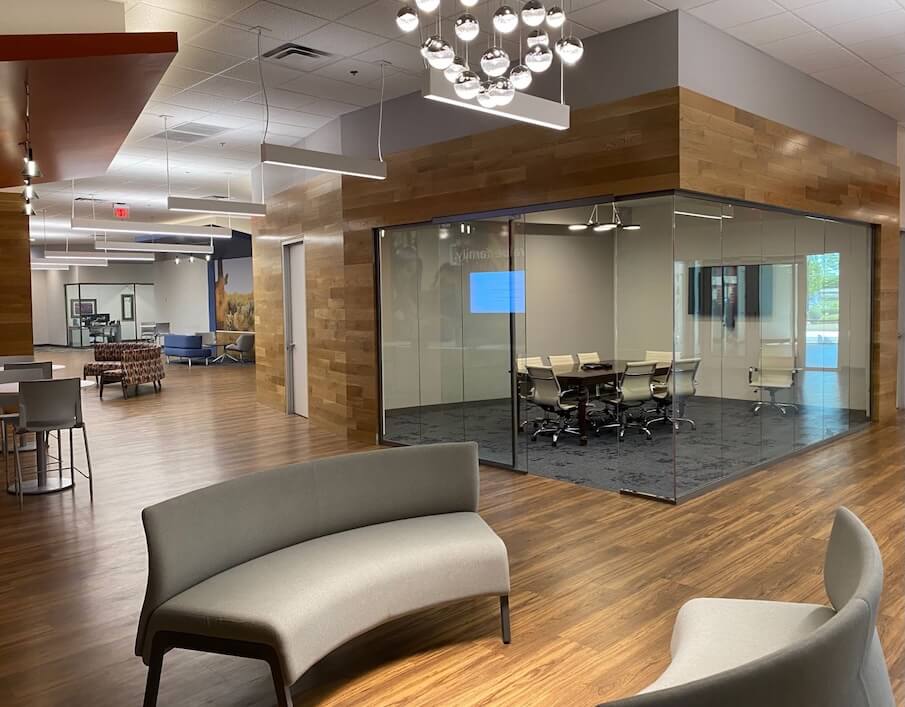
A central feature of the design is a “promenade” that runs through the office, connecting departments and conference rooms while serving as the backbone of the workplace.
Layout strategies like this help break down departmental silos and make collaboration easier in everyday work.
2. Flexible Workspaces for Hybrid Teams
Even for organizations where most employees work in the office, hybrid work has changed expectations around how headquarters space is used. Many banks and credit unions are moving away from rigid office layouts and instead creating environments that support a variety of work styles.
Rather than rows of assigned desks, modern headquarters often include shared workstations, flexible collaboration areas, and small team rooms that allow employees to move between focused work and group discussions throughout the day. Quiet rooms are also becoming more common, giving staff dedicated space for concentration or private calls.
This type of flexibility helps institutions support remote and hybrid schedules without dramatically increasing their real estate footprint. It also allows headquarters to adapt over time as workforce needs evolve.
For clients, the goal is not to eliminate offices entirely, but to design spaces that balance collaboration, privacy, and flexibility while making the most efficient use of available square footage.
3. Designing for Natural Light, Wellness, and Workplace Experience
Employee experience has become a central consideration in headquarters design. Banks and credit unions increasingly recognize that the physical environment can influence employee morale, productivity, and long-term retention.
Many institutions are incorporating on-site amenities such as fitness centers and cafeterias into their headquarters design. These spaces go beyond convenience by creating opportunities for employees to recharge, connect informally, and spend more of their day within the workplace environment.
Another trending strategy many clients are prioritizing is creating workplaces that feel brighter, healthier, and more connected to nature. Access to natural light, open layouts, and thoughtful design elements can make a significant difference in how employees experience the workspace each day.
At Ridge View Bank’s headquarters in Roanoke, VA, this focus on wellness is reflected in the atrium’s design, which features a large preserved green moss wall. The natural element brings color and texture into the space while helping create a welcoming environment for staff.
The moss wall acts as both a visual focal point and a reminder of the bank’s connection to the natural landscape of the region.
Design decisions that incorporate natural elements, daylight, and comfortable gathering areas may seem simple, but they can have a meaningful impact on workplace experience. For community financial institutions, these features help create headquarters environments that support employee wellbeing while strengthening organizational culture.
4. Using Headquarters Design to Reinforce Brand and Mission
Community banks and credit unions often have strong local identities, and headquarters design can bring that story to life in a meaningful way.
Environmental graphics, branded interior elements, and storytelling displays allow institutions to communicate their mission, values, and community impact throughout the building.
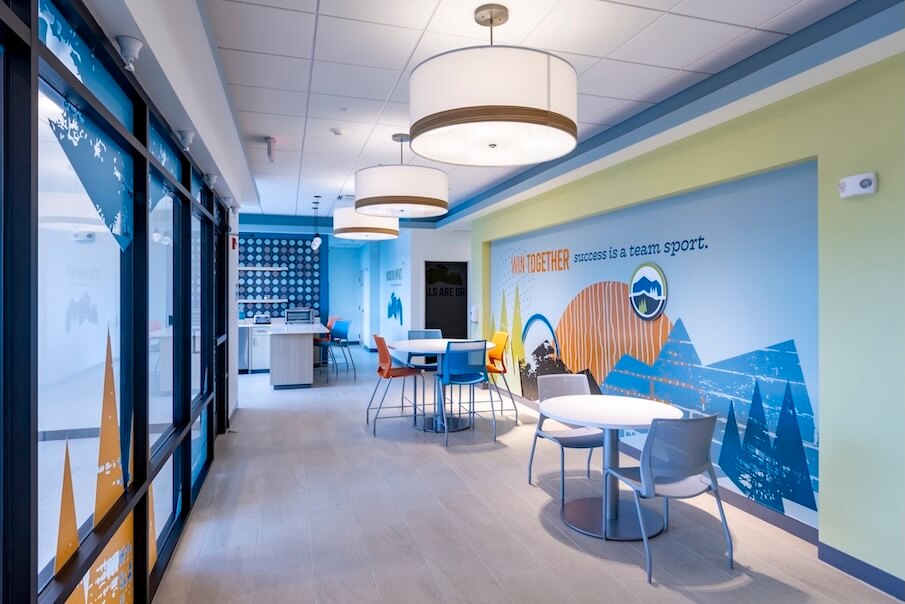
The Granite State Credit Union administrative build in Nashua, New Hampshire is a strong example of this approach. After completing a rebranding initiative that introduced a fresh logo inspired by the New Hampshire landscape, the credit union wanted its new headquarters to carry those brand elements throughout the building.
The design integrates the credit union’s updated visual identity across the workspace, creating a cohesive environment that reflects the organization’s mission and regional roots. At the same time, the headquarters balances brand expression with functionality, providing bright and inviting offices while maintaining a focus on employee success and long-term growth.
5. Integrated Branch and Headquarters Locations
An increasingly common strategy for community financial institutions is combining a headquarters with a flagship branch location. This approach allows banks and credit unions to maximize the value of their real estate while strengthening the connection between administrative teams and frontline banking operations.
By integrating a branch into the headquarters facility, institutions can make better use of space and create a highly visible location that serves both employees and customers. These locations often function as flagship branches that showcase the organization’s brand, service model, and approach to member or customer experience.
Both Ridge View Bank and Granite State Credit Union incorporated this strategy in their headquarters projects.
At Ridge View Bank, the headquarters building includes a full-service branch that anchors the facility and creates a welcoming presence for customers. This integration allows the bank’s leadership, operational teams, and branch staff to work within the same environment, strengthening collaboration and ensuring that decisions remain closely connected to the customer experience.
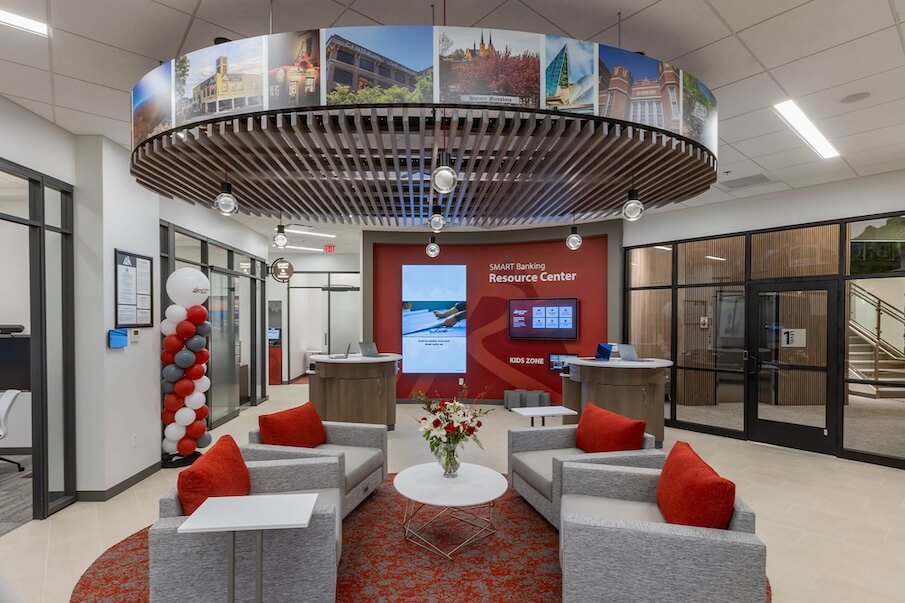
Similarly, the Granite State Credit Union headquarters includes a branch location that serves members while also acting as a visible expression of the credit union’s brand and community presence. Integrating the branch with the headquarters allows the credit union to maintain a strong connection between its administrative functions and the day-to-day work happening on the member-facing side of the organization.
For community banks and credit unions, this model offers several advantages. It allows institutions to maximize efficiency, increase visibility within the community, and test new branch formats or service approaches. At the same time, it helps ensure that leadership teams remain closely connected to the frontline teams who interact with customers and members every day.
6. Planning Flexible Space for Future Growth
Flexibility is another priority shaping headquarters design. Clients increasingly want spaces that can evolve alongside their operations.
For example, the Ridge View Bank headquarters project included a second-floor area originally planned for future use. As the organization expanded, that space was later converted into a call center to support additional staff and operational needs.
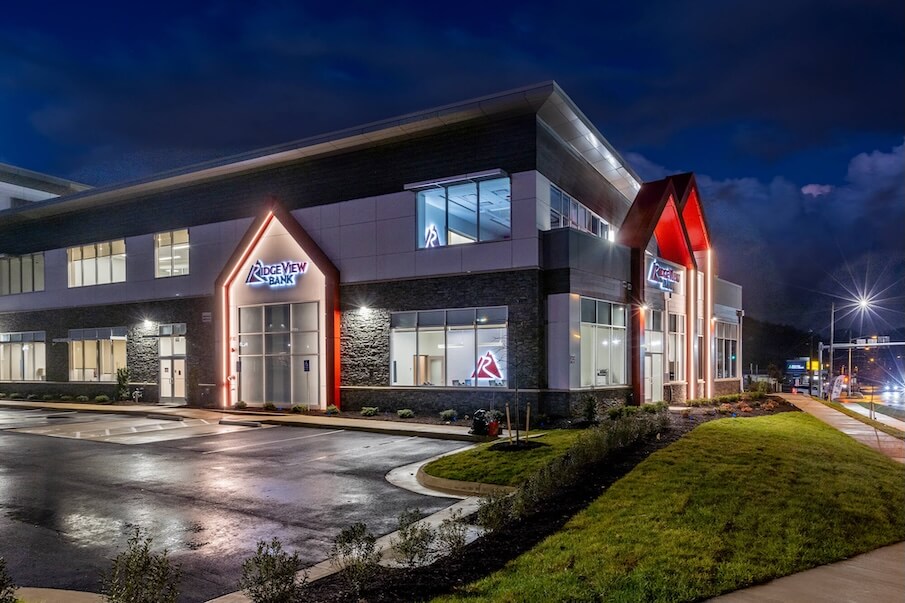
Designing adaptable space allows institutions to scale operations without major renovations or additional facilities.
For community banks and credit unions focused on long-term efficiency, this type of future-ready planning is becoming a key priority.
💡 A Space Assessment can help identify opportunities to reduce square footage by optimizing your headquarters’ layout. Request a free assessment.
7. Training and Professional Development Space
Workforce development has become an increasingly important priority for banks and credit unions. As a result, many new headquarters projects include dedicated training and professional development spaces.
These areas may include classrooms for staff education and meeting rooms designed for leadership development programs. In some cases, institutions also incorporate spaces that support community financial education initiatives.
Technology plays an important role in these environments. Many training rooms are designed to support hybrid learning, allowing employees from branch locations or remote teams to participate virtually. This helps institutions deliver consistent training across their entire organization.
8. Integrating Technology Across the Workplace
Technology now plays a larger role in headquarters, supporting both internal operations and employee communication.
Digital signage and touch technology are used throughout our headquarters projects to create a modern employee experience, share information more effectively, and foster a connected workplace.
These systems also help workplaces stay adaptable. Messaging, training materials, and internal communications can be updated quickly without changes to the physical environment.
9. Bringing Teams Together After Mergers and Organizational Growth
Many headquarters projects occur during periods of organizational change, such as mergers.
In these situations, the workplace plays an important role in bringing teams together and establishing a unified culture.
The Copper State Credit Union headquarters renovation followed the merger of two credit unions. The design focused on creating an environment that supports collaboration, shared goals, and a unified organizational identity.
When executed well, headquarters design helps employees feel connected to the organization’s future while reinforcing the institution’s mission and values.
10. Designing Headquarters That Work for Community Financial Institutions
Headquarters design priorities for banks and credit unions differ significantly from those of large national institutions.
Rather than focusing on large campuses or architectural showpieces, successful projects prioritize practical outcomes such as:
- Supporting employee collaboration and culture
- Reinforcing brand identity and mission
- Integrating workplace technology
- Planning flexible space for future growth
- Creating environments that support employee wellness and performance
When these ten elements come together, headquarters become more than office buildings. They become strategic assets that support employees, strengthen organizational culture, and reflect the institution’s role in the community.
For our clients, thoughtful headquarters design helps position the organization for long-term success. The most effective projects align workplace strategy, brand identity, and operational needs to create environments that support both employees and the communities they serve.