Hawaii State Federal Credit Union - In-Store Microbranches

O'ahu/Maui, Hawaii

PROJECT OVERVIEW

Overview

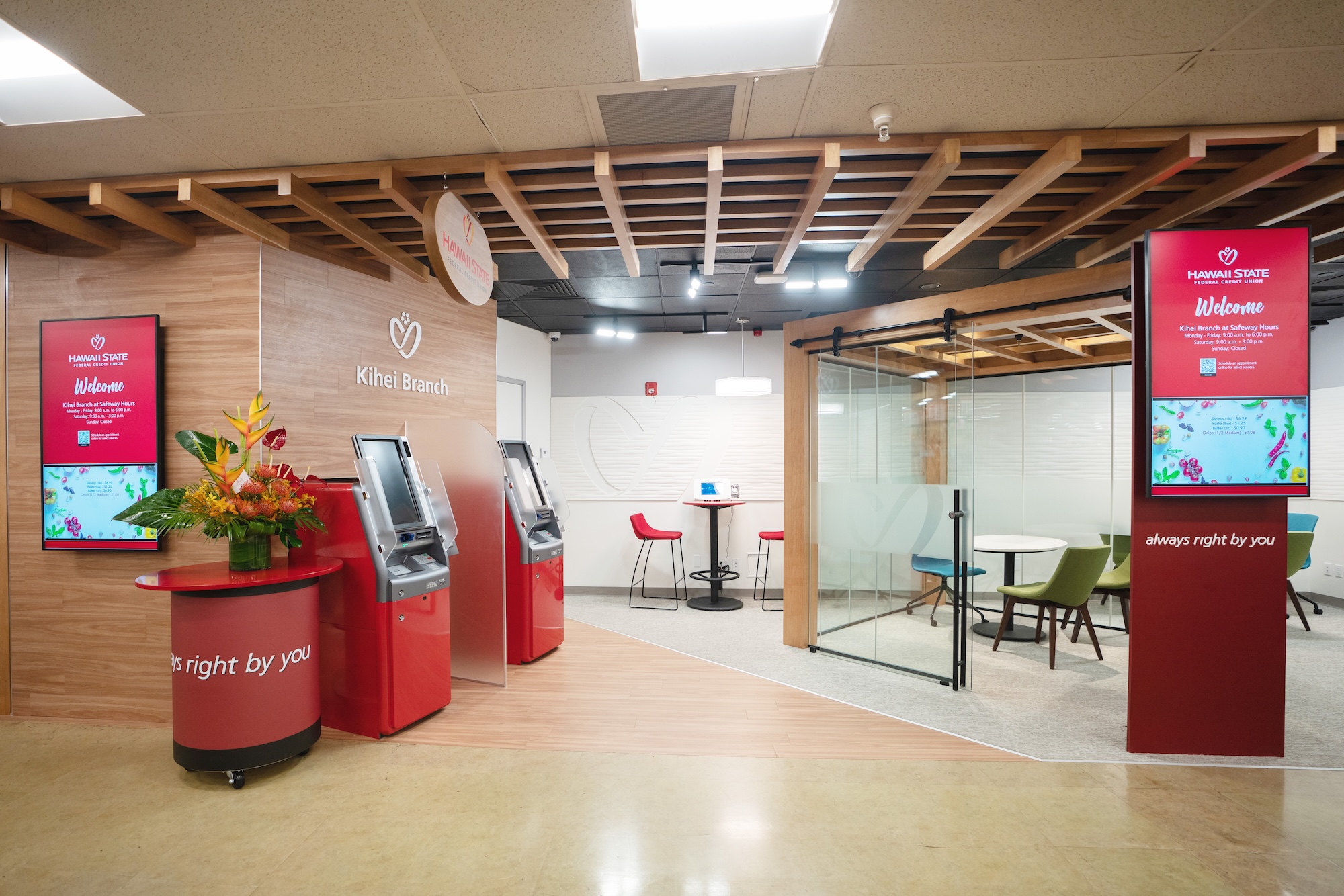
Hawaii State Federal Credit Union partnered with The Element Group to reimagine what a fully operational branch could look like at a micro scale. Located inside grocery retail environments across O’ahu and Maui, these in-store microbranches deliver the full Hawaii State member experience within an extremely compact footprint while maintaining the same look, feel, and service expectations as their larger retail locations.

Each location needed to support core member services, privacy, brand consistency, and operational efficiency while fitting into spaces as small as 251 square feet.
Locations

  • • Kihei
  • • Hawai’i Kai
  • • Waikele
  • • Kapahulu

The Challenge

Designing a complete financial center in 251–425 square feet required the team to rethink traditional branch planning.

Key challenges included:
  • Delivering full branch programming in a micro footprint
  • Designing for privacy in a high-visibility retail environment
  • Maintaining brand consistency across multiple store conditions
  • Consolidating back-of-house functions into minimal space
  • Supporting cost-conscious construction decisions

The Opportunity: A New Kind of In-Store Banking

The in-store microbranch strategy emerged as a convergence of real estate opportunity, retail partnership, and Hawaii State FCU’s evolving branch delivery model.

As a major local bank began closing its in-store grocery locations, Hawaii State and Safeway recognized an opening to bring a new kind of financial services experience into high-traffic stores. The grocery environment offered something especially valuable: consistent exposure and convenience.

Rather than viewing the branch as a small standalone footprint, Element helped Hawaii State view it as a branded presence inside a much larger ecosystem, often a 50,000-square-foot grocery store. In this model, the branch becomes a stage for brand recognition, relationship-building, and consultative member engagement.

in-store branch
tinified KiheiBranchOpening-2-cc- wide of office space and tables (1)

Design Approach

Element approached the project as both a spatial puzzle and an experience-driven planning effort. Each location required custom layout solutions, but all branches were designed to deliver the same core Hawaii State experience.


1) Experience First
The design process began with the member journey. The team focused on the choreography of how members approach, how staff engage, and how the space supports consultative service in a highly visible environment.

This approach ensured that even the smallest locations still felt intentional, welcoming, and operationally sound.


2) Right-Sized Programming
Each branch was planned using Hawaii State’s programming standards as a starting point. The team filtered and refined those needs to fit micro footprints without sacrificing service delivery.

Where appropriate, ITMs reduced the need for traditional teller infrastructure and allowed staff to focus more on member engagement and consultative conversations.

3) Brand Consistency at Any Scale
Even inside grocery environments, the branches were designed to feel unmistakably like Hawaii State FCU. The team carried consistent finishes, materials, and design language across all locations so members immediately recognize the brand, reinforcing trust and familiarity.


4) Privacy Without Excess Space
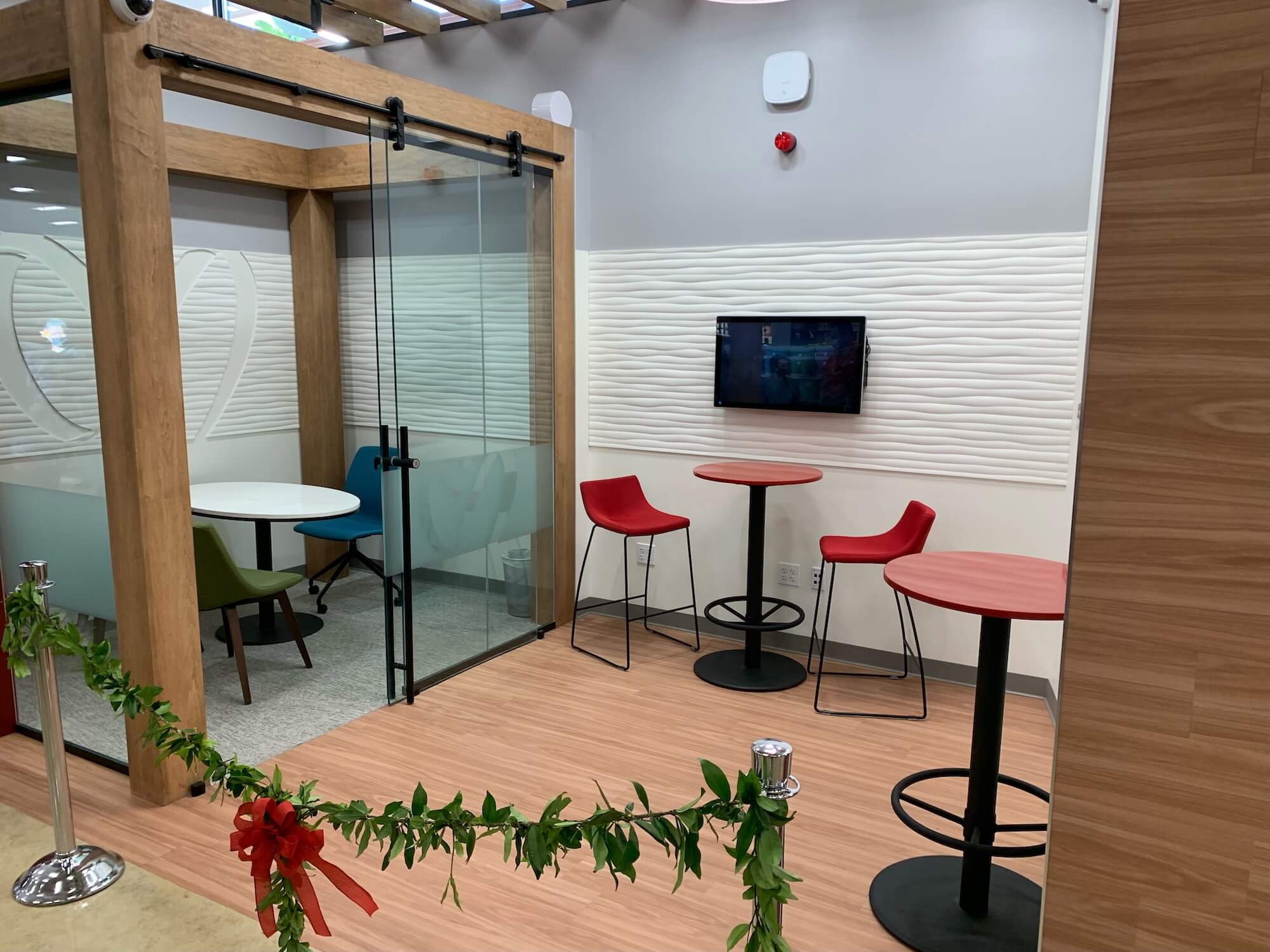
Each location includes at least one private office or layered privacy strategy. In Hawai’i Kai, the team designed a semi-private zone leading into a fully enclosed office, creating multiple levels of confidentiality within a shallow footprint.


5) Highly Efficient Back-of-House Planning
Back rooms were compressed into multi-use spaces supporting ITM operations, storage, break needs, and IT infrastructure. In once case, this required fitting all back-of-house functions into a room measuring no more than 90 square feet.

tinified KiheiBranchOpening-3-cc - close up office space (1)
kapahulu staff

Cost-Conscious Design Solutions

Element employed targeted value-engineering strategies to maintain design intent while supporting cost-conscious construction.

These included:
  • Selective millwork placement (only building what would be visible to members)
  • Material substitutions, such as luxury vinyl tile (LVT) on feature walls in place of wood planks
  • Adaptable ceiling strategies to maintain consistency across store conditions

Branch Size Breakdown

The In-store Microbranch

A fully operational financial services location, typically under 500 square feet, designed to deliver core member services through a right-sized, program-first branch model. An in-store microbranch’s defining characteristic is the ability to provide a complete branch experience, including privacy, brand presence, and consultative service, within an extremely compact footprint. For Hawaii State FCU, these locations are best described as in-store microbranches, reflecting both their micro scale and their placement within high-traffic grocery retail environments.

Kihei — 386 sq. ft.

• Deeper, more square footprint than other locations • Allowed the team to rotate the enclosed office to create a clearer meeting zone and a more open enrollment area • Maintained circulation and visibility despite the compact size

Hawaiʻi Kai — 425 sq. ft.

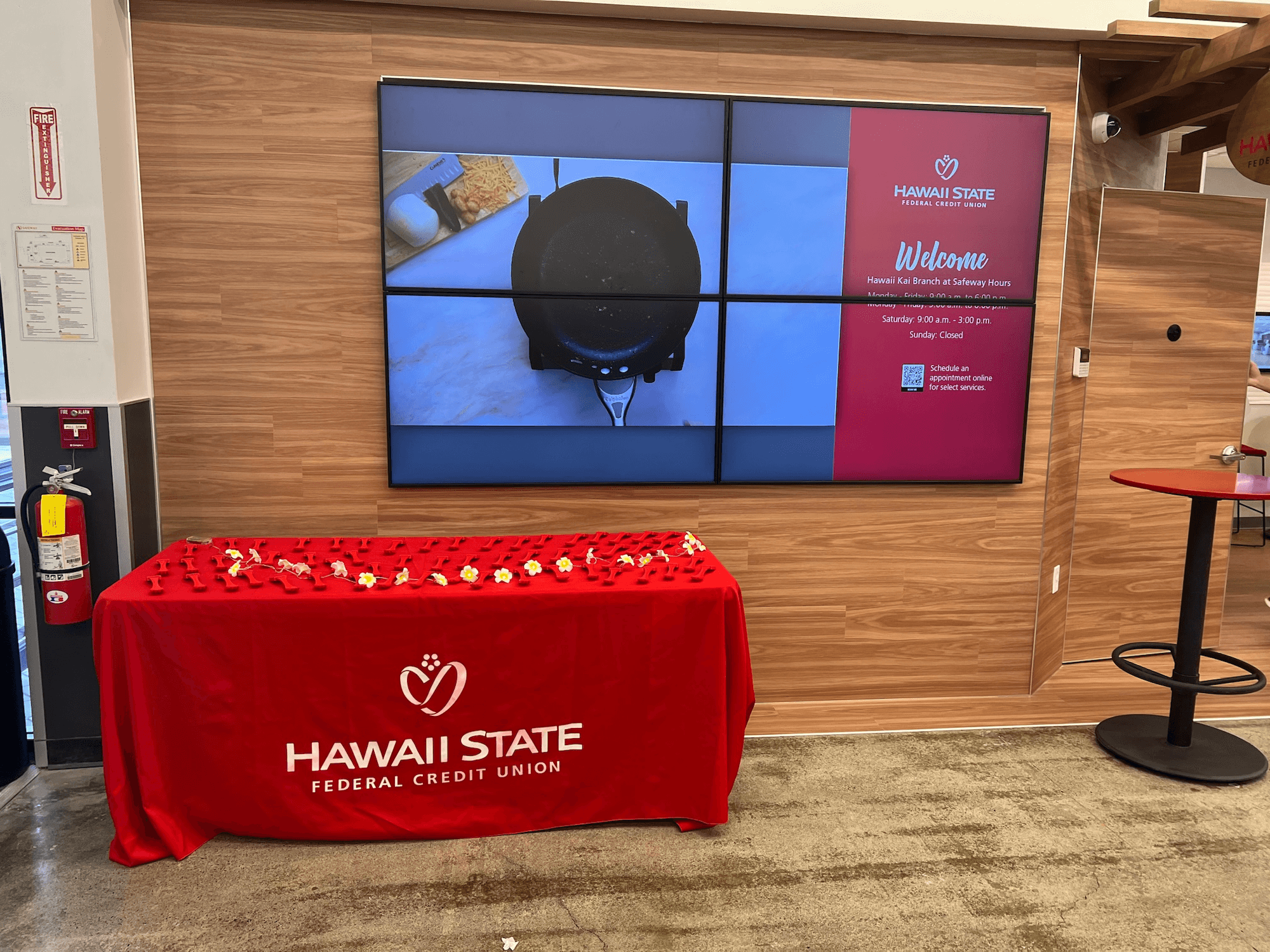
• Layered privacy strategy: a semi-private meeting zone leading into a fully enclosed private office • Wide storefront presence increased visibility within the grocery environment • Added challenge of a unique, non-rectangular shape; the wide frontage spanned about 45 feet, and the depth was limited to approximately 10 feet

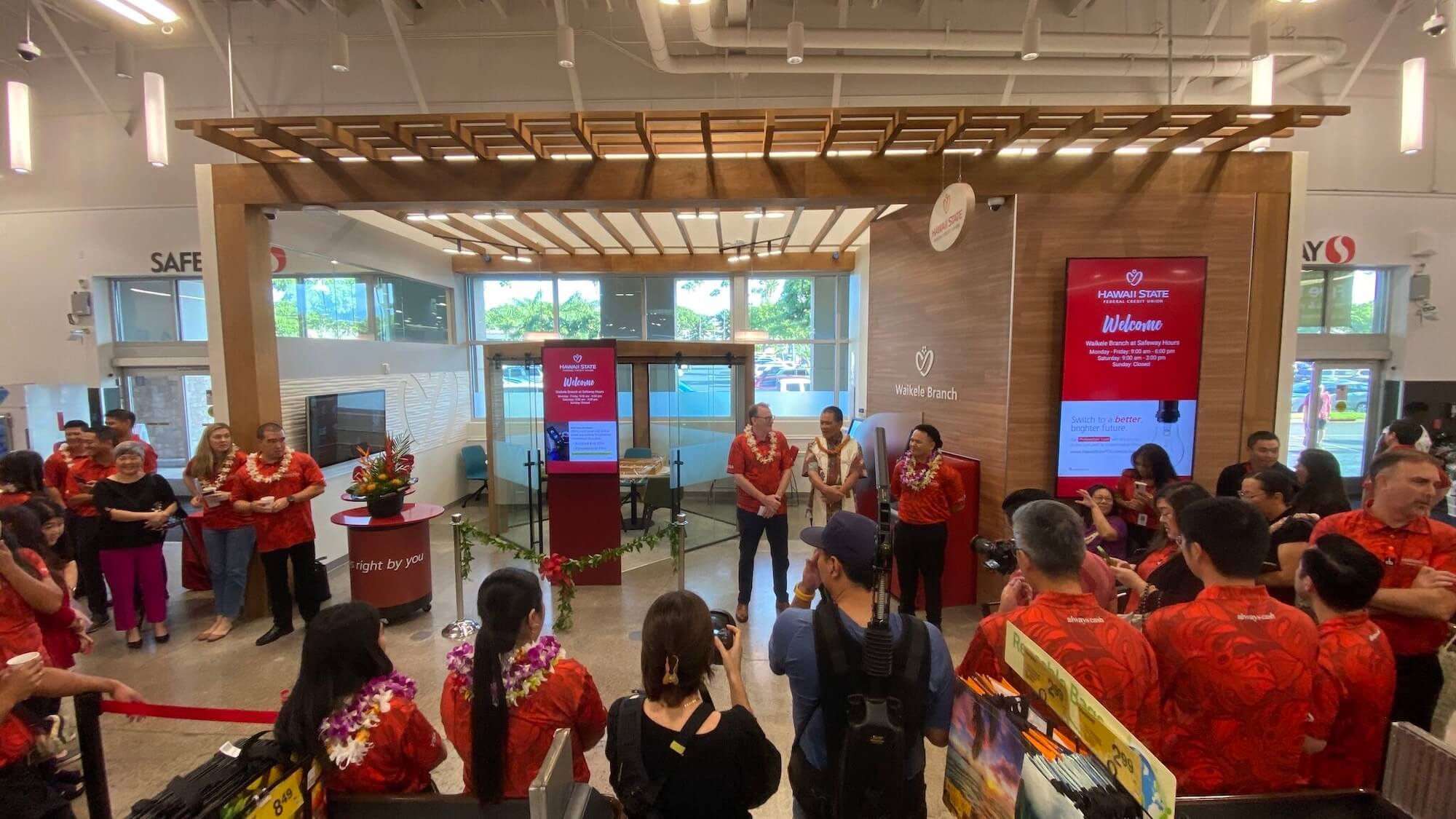
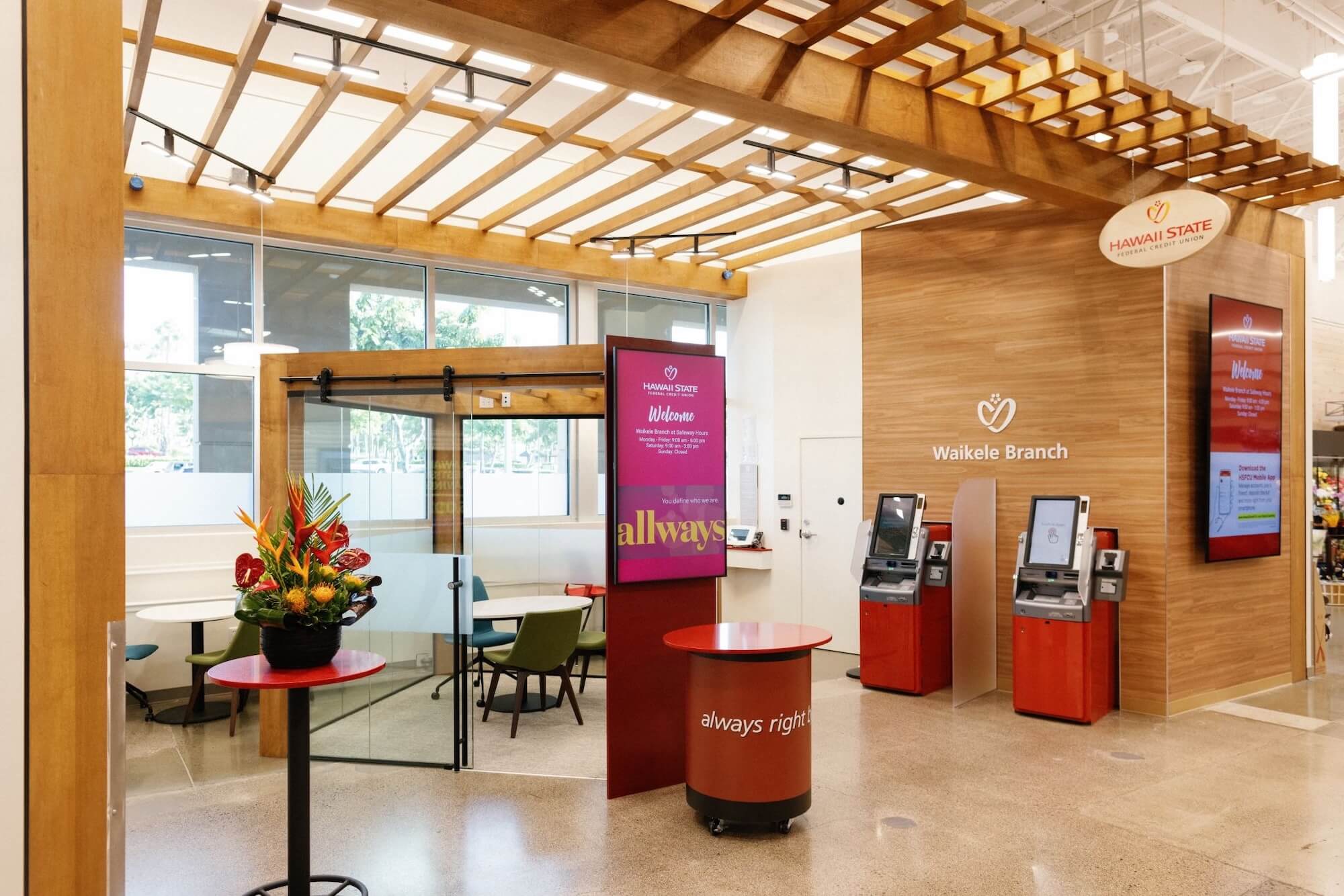
Waikele — 402 sq. ft.

• Served as a compact prototype for consistent programming • Required careful sizing of all branch components to maintain brand standards • Reinforced the repeatable in-store branch kit-of-parts model

Kapahulu — 251 sq. ft.

• The most spatially constrained of all locations; a “micro-micro” branch, with the Back of House space measuring roughly 90 square feet • Required a fully operational solution while maintaining the same brand finishes and aesthetic expectations as larger branches • Demonstrated how the microbranch model could be pushed to an extreme while remaining functional and experience-driven

Why It Works

In-Store Visibility Changes the Value Equation
In-store microbranches aren’t only about downsizing. They provide brand presence inside high-frequency destinations where thousands of people pass by weekly.

Consultative Banking in a High-Traffic Setting
These branches were designed to support friendly, approachable engagement, not just quick transactions. The branch becomes a place for relationship-building, supported by a modern service model.

A Repeatable Prototype for Growth
Together, the four branches establish a scalable in-store microbranch prototype. Each location adapts to its footprint, while the member experience remains consistent.

Privacy and Function Can Exist at Any Scale
Through layered office strategies, compact planning, and right-sized programming, the design proves that privacy and operational integrity can be delivered even in the smallest footprints.

tinified KiheiBranchOpening-43-cc- team photo

Results

The completed in-store microbranches demonstrate that thoughtful design, operational alignment, and experience-driven planning can overcome extreme spatial constraints.
  • Fully operational branches in spaces as small as 251 square feet
  • Consistent brand identity across four locations
  • Strong visibility inside high-traffic grocery environments
  • Cost-conscious construction strategies without sacrificing design intent
  • A scalable microbranch model supporting Hawaii State FCU’s expansion

These in-store microbranches now serve as an extension of Hawaii State FCU’s broader branch network, delivering convenient, high-touch service in a format designed for Hawaii’s unique real estate landscape.